
WE NEED BONAPARTE! (Part 1)

Give Unto Caesar What is Caesar's?
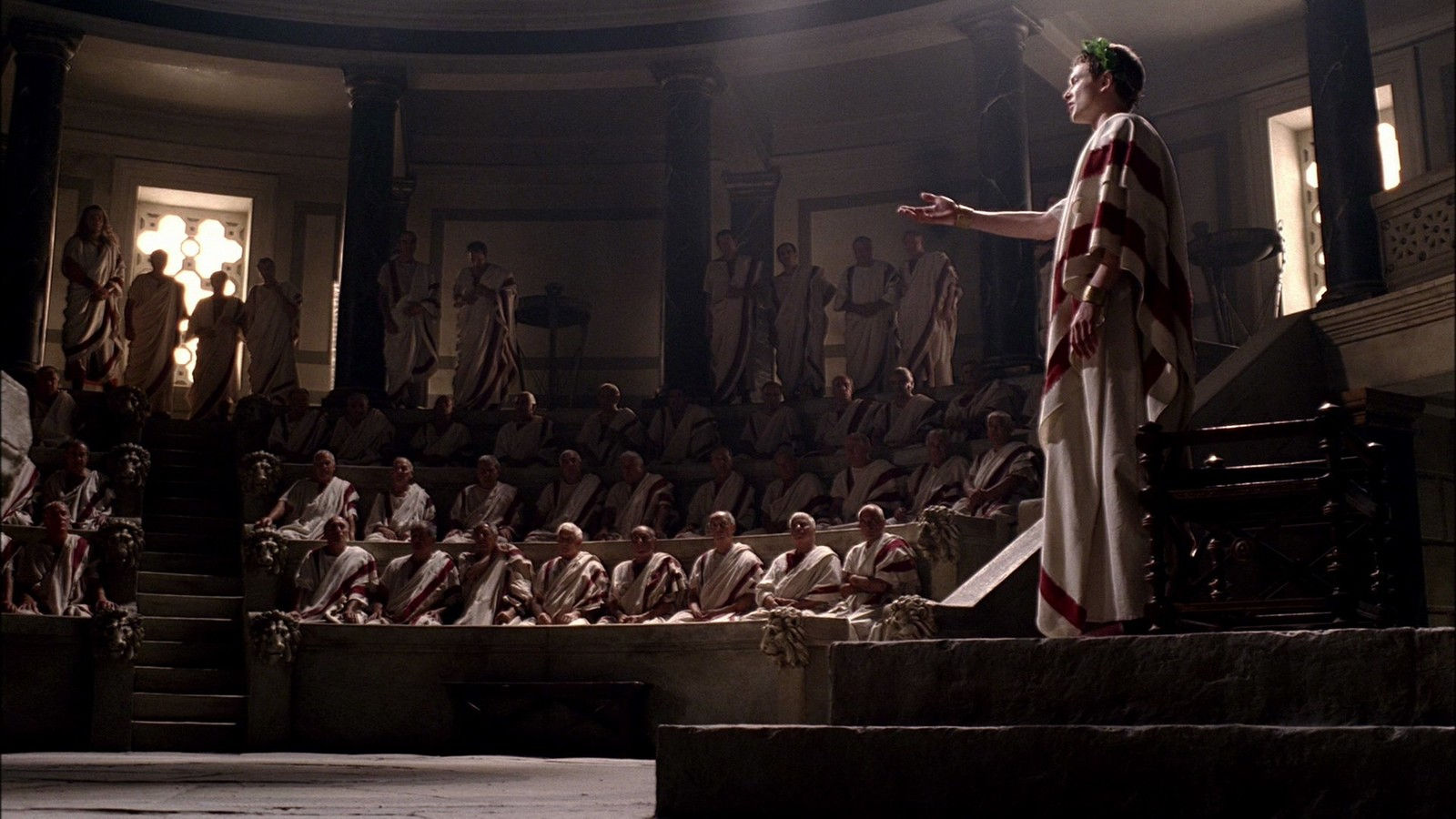
49BC, Julius Caesar was on the border of Italy by the river Rubicon. His political enemies in Rome had done all they could to frustrate his political career. This upstart from impoverished nobility had grown too powerful for the corrupt Senate and was now sat in his tent considering his options. Roman law dictated four things that now weighed heavy on Caesar's mind.
Roman law stated that upon leaving high office, be it Consul (President) or Praetor (Magistrate) the Roman was to receive a five year Governorship of a province.
Roman law stated that no Proconsul (former Consul) or Propraetor (former Praetor) was eligible for high office until a decade after his tenure.
Roman law stated that any Roman in command of armies must disperse said armies upon entry into Italy and appear by Rome as a private citizen.
and final, Roman law prescribed legal immunity to Governors, Praetors and Consuls.
Roman law 1
Caesar had first served as Consul in the year 59 BC, a year filled with chaos and malicious political machinations from Cato and his conservative optimate faction. Remember Cato's filibustering of Caesar's land reform bill? https://biblicalresearchtr.wixsite.com/book/single-post/understanding-legislative-power-pt-1
He had been forced to use 'unconventional', forceful means to push through his legislation against such openly unfair political treatment. This bullying by Cato did not however begin with his year of consulship. At the beginning of the 60BC electioneering month Quintilis, which today we know as July thanks to Julius Caesar, the governorships of the winners was pre-set before the election. As it was clear that Caesar was most popular to win, Cato influenced the Senate to rather degradingly accord to the winner of the elections, governorship of the highways and backroads of Italy. While other Governors controlled large wealthy provinces as Spain and Greece, Cato intended Caesar to police the highway robberies of backwater Italian towns. Of course Caesar found a way of changing things to Cisalpine Gaul - North Italy south of the Alps which was inhabited by Gaulic tribes. This experience was however not lost on Caesar.
Roman law 2
Initially, in concert with the 5 year Governorship statute, this law limited political engagement of Proconsuls likewise to 5 years. But because of Cato's great jealousy and dislike of Caesar, he moved upon the Optimate dominated Senate to reshuffle this into 10 years. And so at the end of his 5 year governorship, Caesar was desperate to extend his governorship for another 5 years until when he would be eligible to contend for the consulship again. Bribes flowed into Rome and Caesar was saved with another 5 years. This experience was not lost on Caesar.
Roman law 4
During his governorship of Cisalpine Gaul, Caesar knew that he had limited time. Cato's faction accused him of abuse of office, of which he was truly guilty but only because Cato had weaponized the law against a political rival. Either way, he needed to remain Governor until he would be able to vie for Consulship again, as a means of extending his immunity from public prosecution. In order to ensure public sympathy and sure victory at the polls in the future, Caesar begun a campaign of conquest against the Transalpine Gauls (southern France) and eventually Gaul proper (today France). He frequently dispatched news readers to Rome to publicly read out his victories which endeared him to the people greatly all the while he built up his legions into quite possibly the most experienced army in the Republic. Which now brings us back to Roman law 3
Roman law 3
This was an old idea. It was designed to make sure that no Roman general would take Rome by force of arms. It perpetuated the myth of the Pomerium, that all Romans, great or not, rich or not, were merely citizens in the face of the eternal city. She, sacred Rome, was not to be taken by force, but to be seduced with high political pleasantries, debate and the free vote. Caesar had completed his 10 years of governorship and had tossed his hat into the ring for a second take on the Consulship. Through his astute political maneuverings and endless battle victories against the Gauls he had gained the popular admiration of the people. Clearly again he was posed to win in a landslide, and clearly again Cato was out to frustrate him. The Senate was bribed to bar him from running for office on frivolous politically motivated charges, and Caesar had a choice to make: Cross the border into Italy with an army and march on Rome or surrender himself to jealous competitors who have misused the law on him.
Alea lacta est
Caesar left his tent to address his men. With tense unremorse he cried out "Alea lacta est" - the die is cast. Let the chips fall where they may. The men shouted in adulation. Majority of his ten legions would remain in Gaul as reserves under his brilliant lieutenant Labenus. He however would cross the Rubicon into Italy with a small army. Hitherto he had avoided all conflict but had constantly been buffeted by the jealous Cato faction. And why? because Caesar had perfected the art of accumulating Gravitas in Roman politics. An art Napoleon Bonaparte recreated masterfully centuries later as we shall next see.

For now though, Rome would never be the same. If the Senate wanted war, Caesar will give them one.
NEXT: GIVE UNTO BONAPARTE WHAT IS BONAPARTE'S?
Comments