
Understanding Legislative Power (Pt. 1)

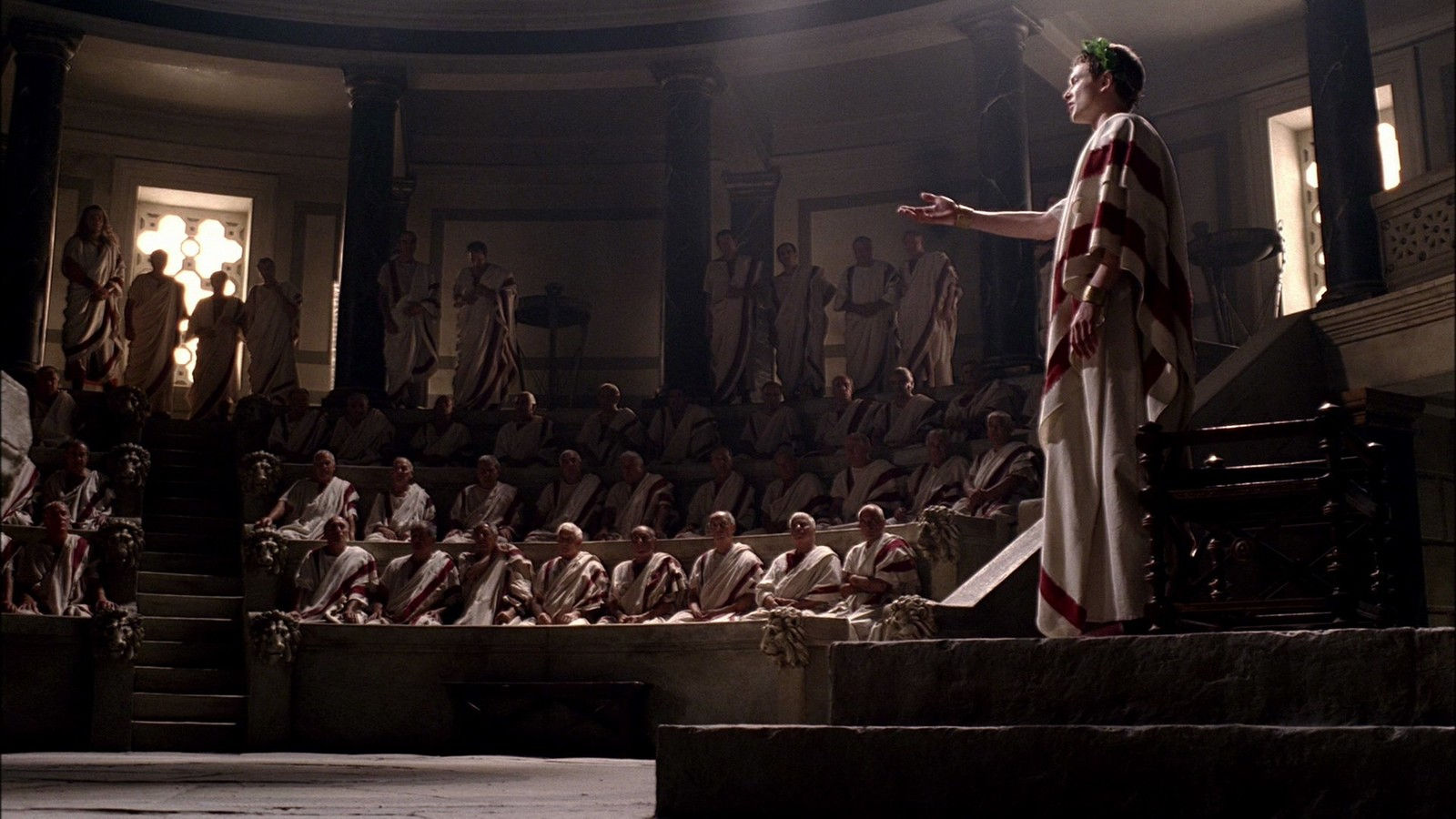
Rome. 59 BC. A man is given opportunity to speak in the Senate. He begins talking, and talking, and talking and he never stops...the man is speaking on anything and everything. The color of the birds, his wife's meal last night, the number of hairs in his armpit. It was clear Cato was stalling. This particular technique is called a filibuster, where in this case a legislator prolongs debate on a proposed bill by unending speech in order to delay or halt it completely. Caesar was besides himself. You see Rome elected its leaders once every year. Julius Caesar had vied and won the Roman equivalent of a President, Consul. But that office was shared between the first and second candidates, as Roman law clearly stated, with each Consul taking the reins or in Roman terms 'holding fasces' in alternating months. His Co-Consul, Cato's son in law Bibulus would hold fasces in February and definitely hoped to derail everything Caesar had tried to accomplish in January. This land reform bill had taken Caesar almost his whole month to bring for debate and Cato was going to run it out time using his mouth.
The Filibuster
It is often mentioned that the majority have their way and the minority have their say. But this appellation of pure democracy is a misnomer to Republics. Republics are not Democracies. They certainly are democratic, but Democracy is a totally different form of government. A democracy is essentially the rule of the majority. A hundred people get into a room to decide on something, whatever fifty one or more decide becomes the supreme decision. This is often dangerous and has its inefficiencies, chief most being that for true liberty to exist the majority cannot prescribe rules for the minority in everything. In a group of three, the dictatorship of majority is force and not necessarily reason, seeing that that group of three, two cannot decide to eat the third and claim to respect the rights of all.
Here is where Republics come in. Republics are an evolved species of Democracies. While republics have democratic constitutional forms, said forms are themselves held in check and balance by certain other constitutional expressions. For example, a president in America is not elected by popular vote, but by how that popular vote affects the electoral college. The electoral college is an additional crucial step that quantifies the interests of the state legislatures as a voting constituent in the American election of the Presidency. Simply, it is not only the population at large that votes for the president but so do the states. That popular vote is tempered with a geographical vote.
With regard to Legislatures, one constitutional expression that guards the minority from being railroaded with undesirable legislation by the majority is the filibuster. Caesar was attempting to pass a law for political expediency, and Cato would not have it. In the Kenyan National Assembly, filibustering is unfortunately outlawed, a tool which if available would have been of great use to those opposing the Finance Bill 2024 within the House. The hopes and dreams of Rex and Ericson Kyalo and all others who perished would likely still be alive and well.
Reason to rule Passion
So why is it important to constitute the Legislative power with all the necessary constitutional expressions? When we speak about Government we speak of two things; first Government exists to protect individuals in their enjoyment of their God given rights, and second, Government revolves around the tasks of law and nothing more. The task of law or powers of government are simply three: 1. Make laws, 2. Enforce laws, 3. Interpret laws...hence the three branches of government. For government that is just, these branches/powers ought to be separate seeing that where two or more are gathered there is tyranny. Tyranny is where the sovereign resides in government among either of the powers. If the President/Executive controls the Legislature for example, he will create a new sovereignty sperate from the people and within government. The Republican ideal is that sovereignty should be separated from the operations of government, and the collective reason of the sovereign are then be expressed through democratic forms such as popular representation. Thus, it is of upmost importance that the three powers are kept separate in order to keep them independent. Yet at the same time, in order to keep them independent and separate, they must be designed in such a way that they are truly equal.

One way I have observed to do this is quite simply to safe guard those constitutional expressions that allow each power to showcase reason above passion. The Legislature for example is a hall of dialogue, of oratory and debate. We all meet there through our representatives, seeing that we all cannot fit there, to debate and discuss. Any standing order that violates constitutional expressions is not only unconstitutional but definitely unrepublican. Our representatives need enough time to peruse, investigate and debate proposed legislation. This idea that a five thousand page bill can be dumped on legislators a mere day before they vote on it, with each member given three minutes to 'debate' it, is an abuse and degradation of the legislative power. It erodes the equality and consequently the independence of Parliament. The Legislative idea is to send those who can best articulate our reason to represent us. Let them argue, debate, wax lyrical, yes even fight, the end goal will be something we can all obey as the voice of God. The process of making sausages is supposed to be unkind to the eyes. So what happens when all this is denied? Part 2 coming up.

Comments