
Chapter Glimpses: Chapter 12-How A Republic Dies

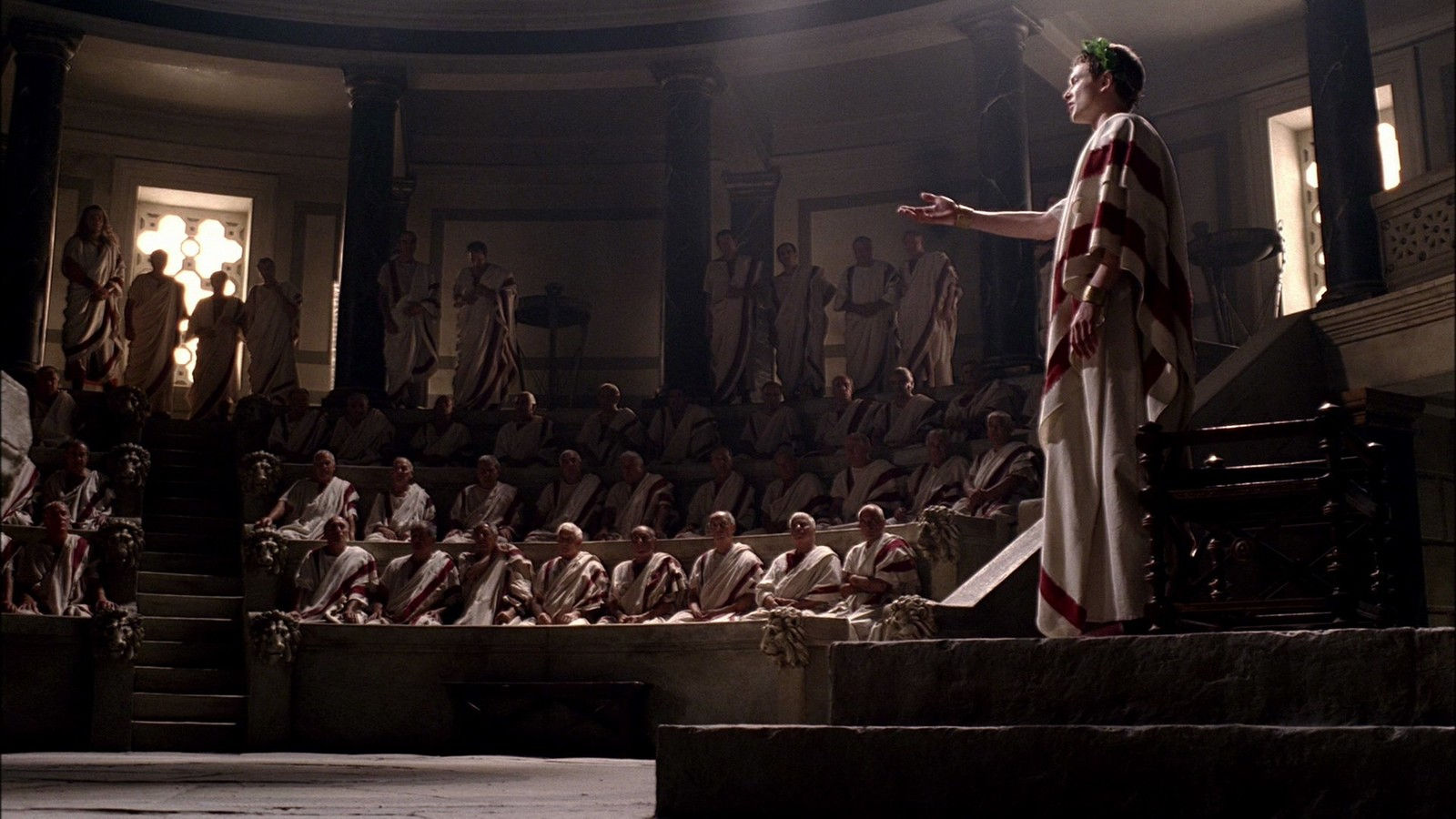
The slow and methodical death of the Roman republic is somewhat the single greatest tragedy in human history. That may sound presumptive to many, and yet in my interpretation of the facts it is in very fact descriptive. The Roman republic was the pinnacle of republicanism in antiquity. The finest expression of the finest form of government a pagan mind could be capable to aspire and attain to. I am here compelled by present sentiments to differentiate between a republic and a democracy. It has become common place to confuse and misuse these words. A democracy is the rule of majority. There are democratic forms within a republican system, but a republic is not a democracy. A republic is a form of government where the people rule by representation. By rights this makes it so that laws are put in place to govern the government, either as a set enacted into a constitution or as traditions passed down over generations. In a Democracy, the whim of the majority is the ruler. In a Republic, however, the ruler is the people as expressed through the rules governing their representation. And by ‘the people’ we include minorities who represent themselves unlike in a democracy where they do not count. More uniquely, the ruled in a Republic is first and foremost the government. As you can see, a democracy is dangerous and has always failed to protect and preserve the rights of individuals and minorities in history. The opportunities for tyranny are easy and endless. Subverting a republic, however, especially a constitutional republic is more challenging.
To begin this story, we will have to travel back in time to the founding of Rome itself. The brothers Romulus and Remus, the fabled progenitors of the Romans, had a dispute as to where they would establish their new settlement. Among the seven hills of Rome, Remus favored the Aventine hill for its closeness to the river Tiber and the opportunities of trade that would offer. Romulus in contrast preferred the Palatine hill for its easily defensible center position. Even from this you can tell the dispositions of both men. Romulus was warlike and Remus commerce minded. The dispute became so bad that the small band of men accompanying them split into two camps. Romulus and his Palatine faction went to their preferred hill to make animal sacrifices as Remus and his Aventine faction did the same. Perhaps a sign from the gods would decide this disagreement.

Auspiciously, Remus saw six vultures flying overhead. Both brothers claimed to have descended from Mars, the god of war and the vulture was his bird symbol. Elated, Remus rushed to Romulus’ camp to inform him of this. Romulus, clearly unimpressed, claimed that twelve vultures had just landed on his Palatine hill. Remus disputed that claim and Romulus insisted that on his hill the birds had not just landed but were twice as many as those that flew above Remus’ Aventine hill. After much arguing, Remus retired to his camp dejected by his brother’s stubbornness. Meanwhile, Romulus began construction on the Palatine hill. The first order of business was to dig a trench on the base of the hill which would later serve in the construction of the city’s walls, When Remus discovered this, he and his Aventine faction marched armed to the where Romulus was digging. A fight ensued and when it was over Remus was dead, apparently by the sword of his own brother Romulus. Romulus would go on to name the city on the Palatine hill Roma, after himself. That trench around the city is the focus point of this chapter. It was known as the pomerium and would expand with the city’s expansion. Rather poetically, it would become a keystone feature of Roman law and of the history of the demise of the republic.
Comments